

Togbe Afede XIV, Paramount chief of Asogli and former council of state member returns ex-gratia of GHS3.6b to the state which has been greeted with mixed reactions. Some say it is a noble gesture rarely seen in this polity known for corruption whereas others believe it is just a populist political stunt. Do you know why the latter think thus?
Corruption is now a cliché in the tongue of many Ghanaians as it has become so endemic and pervasive across all spheres of life; socio-economic, political and cultural sectors of the country. It is a serious crime that is being perpetrated by the least person in the societal strata and worse, by the seat of government including but not limited to demanding and taking bribes before delivering services for which one is already paid, paying money in exchange for unmerited positions, the award of government contracts to cronies, conflict of interest situations, and the distortion of state institutions to gain control. The adverse effects of the menace of corruption are of so much gravitas, such that a colossal amount of $3b, every year, is said to be lost to corruption alone. [https://www.occrp.org/en/daily/10498-ghana-loses-us-3-billion-to-corruption-a-year]
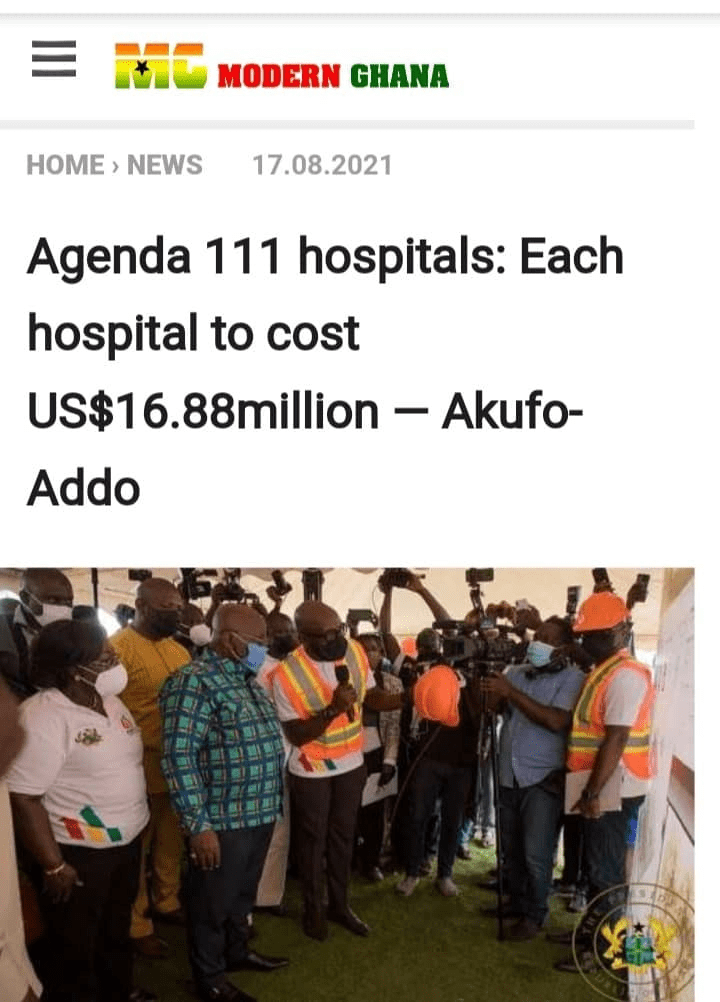
This sum of money if channeled into improving health infrastructure for instance, could build about one hundred and seventy-six hospitals, of the like of government’s Agenda 111 going with $17m as is said be the cost of each hospital. Or it could have been used in other productive sectors of the economy. Corruption in all its forms deprives people, especially the downtrodden in society, of the basic necessities of life: portable water, food, shelter, access to quality education, motorable roads and decent lives. The canker has taken the lives of many on the roads of Ghana, the lives of women in labour, left many to seek shelter under bridges and in kiosks, and sat a lot of pupils under trees as schools. it is so dehumanizing that it necessitates some village folks to share mud of water with animals as drinking water. These are the endless catalogue of grave impacts of graft that cannot be quantified in monetary terms. people at the bottom end of the strata of society, unfortunately, bear the ultimate brunt of the menace of corruption thereby widening the yawing gaps of injustice, unfairness and inequalities among the population.
Despites these grievous consequences, graft has become such a buoyant venture to amass wealth so quickly especially through the windows of party politics in Ghana. There are several factors that make corruption in the country so endemic and cumbersome to combat. One of such reasons is the culture and value system that gives subtle endorsement to corruption. As often said thrives where it is valued. Over the years, graft is something that a good number of the citizens abhor yet glorify. In fact, in Ghana, those who are entrusted with public funds and or resources but does not unduly amass wealth for themselves are said not to be smart. Corruption has become a norm due to the rampant nature with which people appropriate to themselves public resources with impunity. The situation is so worrying as people now believe there is nothing wrong with being corrupt hence it is not surprising to see defense being mounted in support of those accused of engaging in corruption. You now see why some people are up in arms against Togbe Afede’s decision to return the ex-gratia?

Several of several attempts have been advanced in the quest to combat the canker. The fight, over the years, have been much like dressing a sore with a plaster and going to town to celebrate victory whiles the wound festers farther inside. It is such a shambolic fight, more like a show of it than the spirit of it, which has got many to think corruption is not anything surmountable, hence they hold onto the believe that, “if you get the opportunity, also chop.” This is due to governments lack of political will and commitment to prosecute their own who have been found to have engaged in acts of graft. It is established that graft is an attractive venture where it is very difficult to get people to shun it. The firefighting style of addressing has proven to be inefficient. What we therefore need to do with such a difficult task is to use eclectic or multi-pronged ways in tackling the menace. So come with me as I throw light onto the ways of addressing the canker.
There are only two ways of ending or reducing graft in Ghana. First of all, the government of Ghana, must adopt the virtue pedagogy or the character-building approach into the national school curriculum. One of the reasons people steal public funds with impunity is the lack of principles, values and ethics and the cherish for same. To ward off corruption therefore, government must use this bottom-up approach to consciously design the school curriculum where teachers will deliberately teach children values, principles, virtues and ethics such that truth, integrity, justice etc. will become their way of life and can stay with them in their adult life. Children spend most of their formative years in school. Whiles we are teaching them to acquire knowledge and skills, we have to devise ways of inculcating these values into them. This will help change their psyche into a nationalistic and patriotic direction, a departure from the norm where reporting a criminal to the police is viewed as one being cruel. In this same approach, parents will be made aware so that they can reinforce these behaviours and positive attitudes: patriotism, honesty, integrity etc. that the children have learnt, when they get home.
Whiles at this, the government must continue to wage war on corruption by first of all mustering the political will. Any president who is not afraid to lose the next election can fight and win the menace of corruption as such a president will dare to prosecute his own appointees when they are found culpable. Secondly, anti-graft institutions and agencies put in charge of fighting corruption such as CHRAJ, EOCO, CID, OSP etc. must be given adequate funding and allowed to pursue perceived corrupt government officials without undue interference unlike what was once alleged by the first Special Prosecutor, Martin Amidu against H.E Nana Addo Danquah Akuffo Addo, of interfering in the Agyapa investigation. Aside these measures, there must be a stringent law enforcement regime to make corruption a high-risk venture where persons found guilty will serve jail terms while efforts are made to retrieve the stolen moneys the persons have unduly amassed. Moreover, good governance practices such as the Right to Information (RTI) must be strengthened to work effectively.
All in all, there are two-pronged ways of tackling corruption; as one is done to effect a paradigm shift in the mindset of the young ones who will replace the older generation, the second is looking at dealing with it as it happens so as to discourage others from venturing into graft.

 chrisk.art.blog
Leave a comment